
The regular misapplication of the words ‘Zine’ and ‘Fanzine’ is a common occurrence and begs the question of whether they are different or essentially the same thing.
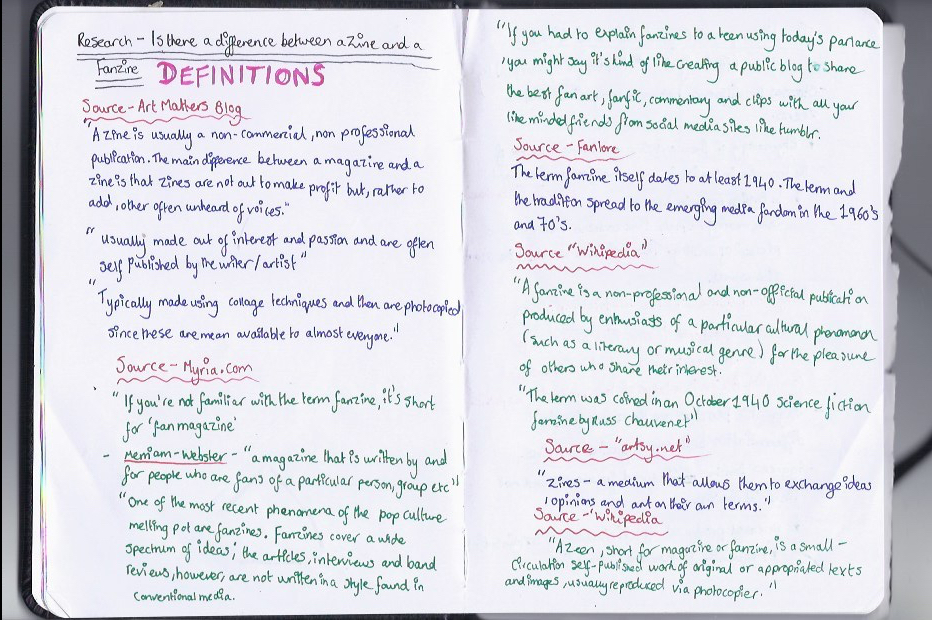
Wikipedia, for example, gives a definition of the two words but does not make clear whether or not they are different types of publications. When defining the word ‘zine’, it states: “A zine, short for magazine or fanzine….”giving the impression they are the same thing. However, when defining a fanzine it contradicts this by stating “A fanzine is a non-professional and non-official publication produced by enthusiasts of a particular cultural phenomenon.”

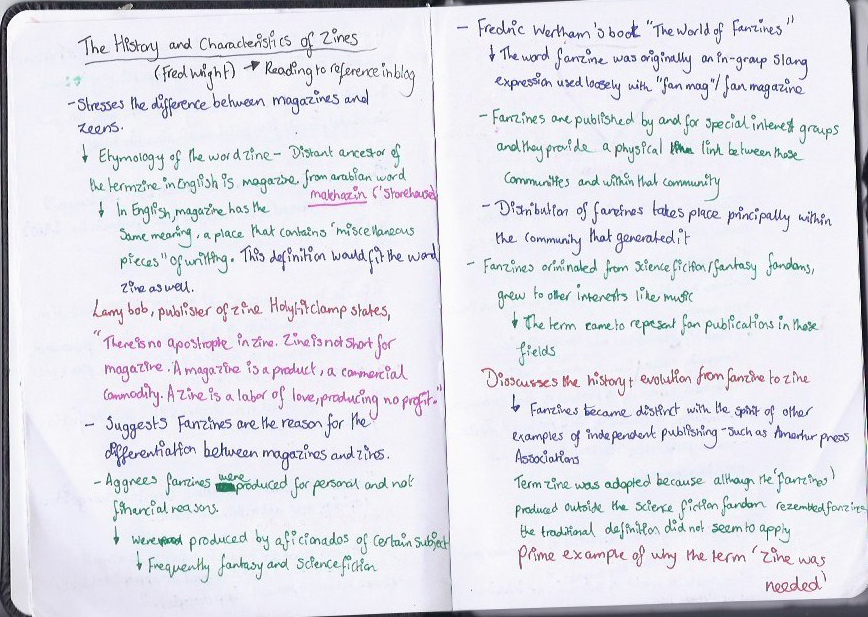
Fred Wright, a doctorial student who did his masters thesis on ‘The History of Zines’ emphasises the difference between the two in his piece on ‘The History and Characteristics of Zines’. He suggests that fanzines are the reason for the differentiation between magazines and zines as the definition for magazine; ‘Miscellaneous pieces of writing’ fits the word zine well however the core belief of zines not being produced for financial gain seperates the two. Fanzines passed this trait onto zines.
Wright describes how fanzines originated from science fiction fandoms and slowly grew to other fields such as music. Overtime the term eventually came to represent any fan publications in a broad range of interests. Although the fanzines produced outside the science fiction genre resembled traditional fanzines, the definition no longer applied, as they were associated with other forms of independent publishing such as Amateur Press Associations therefore becoming “A breed of their own” and giving rise to the term ‘zine’.
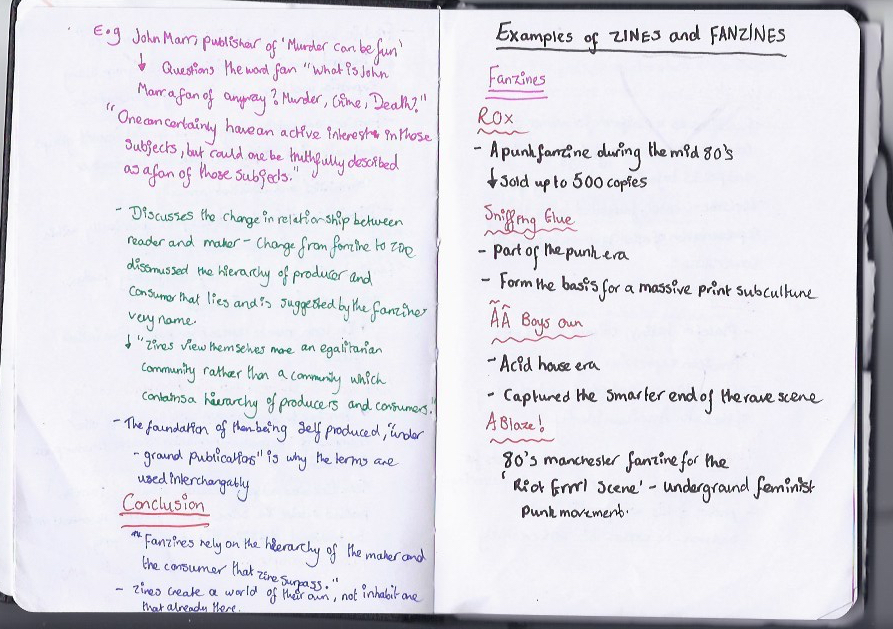
Wright uses the example of John Marr, the publisher of ‘Murder can be fun’ to support this description. He emphasises that there is a need for the two words and that, although they may have similar features (such as publishing independently), there are also clear differences. He questions how Marr’s zine could even be described as a fanzine, “One can certainly have an interest in those subjects but could one be truthfully described as a fan of those subjects?”This quote illustrates perfectly the difference between being a fan of a band, television programme etc. compared with simply having an interest in a certain subject or field.

The difference between a zine and a fanzine is further exemplified through the relationship between the reader and the maker. It could be argued that the transition from fanzine to zine occurs with the removal of the hierarchy of producer and consumer that appears to exist in fanzines . Zines create their own world and do not inhabit a pre-existing one.


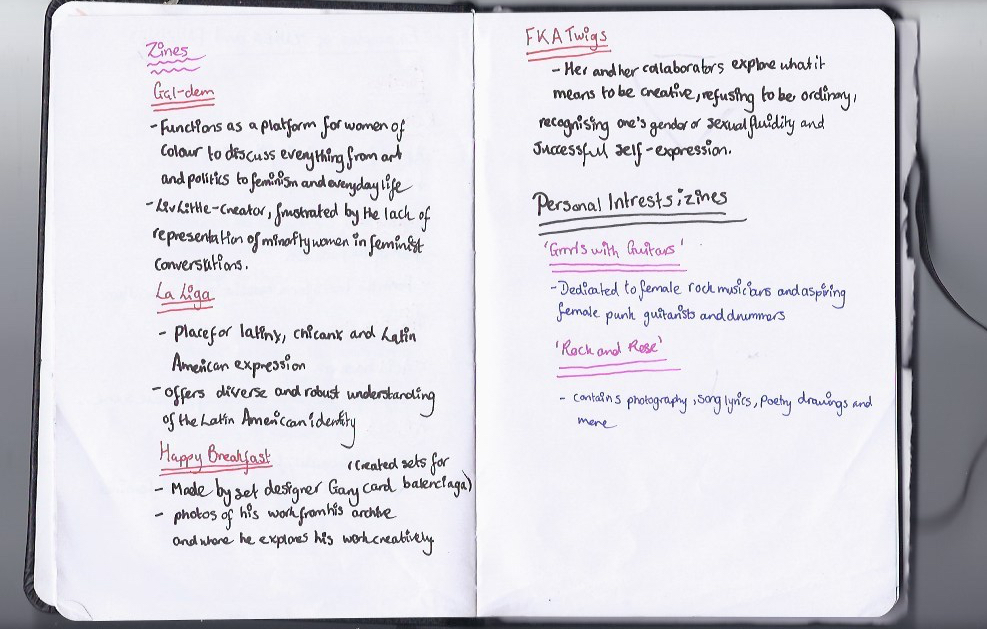
The confusion between the publication types is apparent, as both are non-commercial and/or professional and come from an interest in a certain topic or field. Although they have the same foundations, it should be remembered that fanzines target, and are distributed in, a specific community, whereas zines cover vast interests, social groups and issues and, it could be argued, are more socially aware.


 Celyn's blog